Research Article
Book Review
Aim & Scope
The main aim of Nosyon is to publish academic works related to society and culture.
Nosyon accepts academic works primarily from the fields of sociology, communication sciences, anthropology, philosophy, and literature.
Author Guidelines
Evaluation of Articles:
1. Research articles uploaded to Nosyon should contain at least 4,000 words except, Abstract (Oz) and Bibliography. Articles containing between 2,000 and 4,000 words are considered as Short Articles.
2. The articles submitted to the journal should not have been published or taken into publication order of any journal before.
3. Articles submitted for publication are subjected to pre-check, plagiarism screening, referee evaluation and Turkish and English language control stages. The refereeing process of the articles with plagiarism rate higher than 20% (twenty percent) is not initiated.
4. Articles sent to the journal for publication are examined by the editorial board in terms of purpose, scope, content, method and writing rules. Studies are screened for plagiarism. The articles found appropriate are sent to two referees who are experts in their fields to be evaluated in terms of their scientific competence. If the referee reports are positive, the work is published after the Editor's review; if one of the referees gives a negative report, the Editor or the Editorial Board decides on the publication of the article. Approved articles are put into the list of order of publication. Referee reports are confidential. Authors are answered promptly within the relevant working period.
5. Authors must take into account the reports of the editorial board and referees. The scientific and legal responsibility of the published articles belongs to the author. Editorial board is free to publish or not publish the submitted article. Submitted articles are not returned, whether published or not. Published articles of the authors may be removed from publication in accordance with the decision of the editorial board. Published articles cannot be withdrawn except by the Editorial Board. Authors are not paid royalty fees.
Author Guidelines
1. The research articles uploaded to Nosyon must contain at least 4,000 words, except Abstract and References, the articles that contain words between 2,000 and 4,000 are considered as short article.
2. In the articles, the rules of APA 6th are valid except the following rules.
3. Articles that do not follow the spelling rules will not be included to the referee's process.
4. Nosyon uses double-blind review.
5. Articles should be in A4 size, 2.5 cm from all sides, 12 font size, Times New Roman and single line spaced.
6. The “Öz” and “Abstract” should be 10 font size, between 200-300 words and written in one paragraph.
7. There should be at least 5 keywords in the articles.
8. All the titles should be left-aligned. The title of the manuscript should be 14 font size, bold, all other titles should be 12 font size and bold. Except for the proper nouns and the first word after the double dot, the first letter of all the headings should be capitalised and the other words should start with a lowercase letter. Titles should be enumerated with numbers.
9. Before all titles, there should be 12nk space and after all titles, there should also be 6nk space.
10. The first paragraph after the headings is not inserted, the other paragraphs should be indented 1.25 cm.
11. There should be no spaces between paragraphs.
12. Direct quotations of more than four lines should be 10 font size and it should be written with 1 cm space on the right and left and there should be 6 nk space both before and after.
13. All legal responsibility of the articles sent to Nosyon belongs to the authors.
14. Bibliography should be cited and the following examples should be taken into consideration in its writing:
Books:
Tokoz, O. (2014). Siyasal iletisimi anlamak. Istanbul: Imge Kitabevi Press.
Book Translations:
McLuhan, M. (2017). Gutenberg galaksisi: Tipografik insanin olusumu (G. C. Guven, Trans.). Istanbul: Yapi Kredi Press.
Single-Author Article:
Yasin, C. (2006). Siyasal kampanya yonetiminde butuncul yaklasim. Selcuk University, Journal of Social Sciences Institute, 15, 631–650.
Multi- Author Article:
Karadogan Doruk, S.; Mengu, S.; Goksu, N. F. & Yavasgel, E. (2017). International e-learning as an emerging cultural diplomacy practice. Journal of Current Researches on Social Sciences (JoCReSS), 7(2), 347–362.
Chapter in a book:
Lewis, S. C. (2017). Buyuk veri caginda gazetecilik: Vakalar, kavramlar ve elestiriler (B. Narin, Trans.). H. Hulur & C. Yasin (Ed.), Yeni medya: Gelecegin gazeteciligi (p. 141-154). Ankara: Utopya Press.
Online Publications:
Online Publications with an author:
Ozyurek, B. (2013, 13 February). Yazmak isteyenler icin yazilmis kitaplar. Retrieved from (12 May 2019): https://www.kulturmafyasi.com/yazmak-isteyenler-icin-yazilmis-kitaplar/
Online Publications without author or editor:
Machines. (t.y.). The Matrix Wiki. Retrieved from (12 May2019): https://matrix.fandom.com/wiki/Machines
Corporate Online Publications:
Turkiye Istatistik Kurumu. (2019, 17 May). Dogum Istatistikleri, 2018. Retrieved from (18 September 2019): http://www.tuik.gov.tr/PreHaberBultenleri.do?id=30696
Theses:
Hulur, H. (1996). Techno-scientific constitution of action, globalization and inner dimension: The cases of Ismail Aga and Iskender Pasa branches of the Naqshbandi order (Unpublished Phd Thesis). METU Social Sciences Institute, Ankara.
Senel, O. (2017). Yeni medya reklamciliginda guncel yaklasimlar (Unpublished Master Thesis). Marmara University Social Sciences Institute, Istanbul.
Ethical Principles and Publication Policy
ETHICAL PRINCIPLES AND PUBLICATION POLICY of NOSYON: INTERNATIONAL JOURNAL OF SOCIETY AND CULTURAL STUDIES
The main goal of NOSYON: International Journal of Society and Cultural Studies is to produce, develop and share scientific knowledge objectively. For this purpose, we aim to publish academic studies on culture in electronic form. In order to achieve its founding goals and according to its publishing principles, our journal primarily accepts academic studies, which are related to the fields of sociology, communication sciences, anthropology, philosophy and literature.
Since 2018, Nosyon: The publication ethics and open access policy of the International Journal of Social and Cultural Studies, the guidelines and policies published by the Committee on Publication Ethics (COPE) in open access (For example, the Publication Ethics Committee (COPE) Code of Conduct and For Journal Editors The publication process is carried out in accordance with the Best Practice Guidelines; Code of Conduct and Best Practice Guidelines for Journal Editors and COPE Best Practice Guidelines for Journal Editors. The following statements describe the ethical behavior of all parties involved in the act of publishing an article for NOSYON.If NOSYON: International Journal of Society and Cultural Studies detects situations such as manipulating and distorting data used in academic studies submitted, and using fabricated data, this will be officially notified to the author(s) and the institution(s) where the authors work, and the article will be rejected without being evaluated. NOSYON: The Journal of International Society and Cultural Studies has the right to request output files from the author / authors regarding the analysis results or data collection processes when it deems necessary (according to the feedback given by the editor and / or the referees). In this context, if the authors cannot submit the required documents to the editor and / or referees, the articles will be rejected without being evaluated.
The author(s) or employer(s) of the author(s), if any have
a) Patent rights,
b) The right of the author(s) to use the entire article in their future books or other works without paying any fee,
c) Intellectual property rights such as the right to reproduce the article for its own purposes, provided that it is not sold, are reserved.
However, the author(s) has the right to reproduce the article and distribute it by mail or electronically. The use of any part of the article in another publication is permitted, provided that Nosyon: International Journal of Social and Cultural Studies is specified as the publisher and the journal is cited.
A. Ethical Responsibilities of the Publisher
Nosyon: International Journal of Society and Cultural Studies has been publishing studies on society and culture under the responsibilities of the publishing board or editorial board since 2018 and accepts academic studies primarily in the fields of sociology, communication sciences, anthropology, philosophy and literature.
All Articles submitted to Nosyon: the International Journal of Society and Cultural Studies are examined by the editorial board in terms of purpose, scope, content, method, and writing rules. All submitted papers are checked for plagiarism. The manuscripts found appropriate are sent to two referees who are experts in their fields to be evaluated in terms of their scientific competence. If the referee reports are positive, the work is published after the Editor's review; if one of the referees gives a negative report, the Editor or the Editorial Board decides on the publication of the article. The work that has been approved for publication is taken to the publication order. Referee reports are confidential. Authors are answered promptly within the relevant working period. Nosyon: the International Journal of Society and Cultural Studies is a free journal. No fees are charged from the authors during the submission or publication phases.
In this context, the ethical responsibilities of the publisher are determined as follows:
1. The publisher should acknowledge that the decision authority and the process of refereeing are the editors' responsibility during the publication of the articles in the Nosyon International Journal of Society and Cultural Studies.
2. The publisher is obliged to make the journal accessible and free of charge.
3. The publisher protects the intellectual property and copyright of every article published in the journal.
B. Responsibilities of the Editorial Board of Nosyon: the International Journal of Society and Cultural Studies
1. The Editorial Board of Nosyon: International Journal of Society and Cultural Studies is responsible for all processes before and after the publication of each article submitted to Nosyon: the International Journal of Society and Cultural Studies. The Editorial Board knows this responsibility and fulfils all processes with this sense of responsibility. This responsibility obliges the editorial board to make decisions independently and considering only the public interest leaving the personal interest aside on journal-related matters. The relationship between the Publisher and the Editorial Board is based on the principle of independence, and all decisions taken by the editors are independent of the publisher and any other persons and organizations.
2. The main purpose of the Editorial Board of Nosyon: the International Journal of Society and Cultural Studies is to develop the journal academically and to increase the number of publications.
3. The most important task of the Editorial Board of Nosyon: the International Journal of Society and Cultural Studies is to determine and follow the correct implementation of journal policies such as publication, blind review, evaluation process and ethical principles.
4. Editorial Board, Protects the copyright of the author or authors of the articles published in Nosyon: the International Journal of Society and Cultural Studies.
5. The Editorial Board of Nosyon: the International Journal of Society and Cultural Studies is responsible for taking precautions regarding intellectual property rights, behaviours that do not comply with scientific ethical principles, plagiarism, sending (citation) gangs, and the correct implementation of these measures during the publishing process of articles and journals.
6. The Editorial Board of Nosyon: the International Journal of Society and Cultural Studies keeps all records for each article and all correspondence related to the journal on password-protected computers and may share these documents partially or completely with third parties when necessary legal permissions are obtained.
C. Ethical Responsibilities of Editor, Assistant Editors and Field Editors
1. Editors are responsible for all articles generally in Nosyon: the International Journal of Society and Cultural Studies. In this sense, editors act on the principle of independence and impartiality.
2. Editors; pay attention to determining and implementing policies such as publishing, blind review, evaluation process, ethical principles.
3. Editors do their best to protect the copyrights of the authors published in the journal.
4.Editors are responsible for protecting the intellectual property rights and taking the necessary precautions against unscientific and unethical behaviours, plagiarism and citation cartels.
5. Editors create a motivating environment and policies for both the referee board and the authors.
6. Editors keep a record of all incoming articles and related correspondence.
7. Editors are expected to take care that the articles are original and scientific and contribute to the relevant field or readers.
8. Editors can take the articles to the pre-evaluation stage if the incoming articles do not have a significant problem.
9. Editors keep the referees' credentials confidential and try to ensure that the articles are evaluated neutrally and objectively within the allotted time.
10. Editors support referees to evaluate the articles according to their field of expertise.
11. Editors are required to prevent evaluations against unscientific and academic etiquette.
12. Editors communicate effectively with every member involved in the publishing process and hold meetings in certain periods.
13. Editors are responsible for protecting the individual data of authors, reviewers and readers.
14. Editors take action against misconduct. In case of any complaint of misconduct, they objectively conduct an investigation and share information and findings on the matter.
15. Editors endeavour to correct inconsistencies or misdirections in articles.
16. Editors take into account the criticism of the articles and take care to give the author of the article that is criticized the right of reply.
17. Editors examine the complaints sent to the journal and make the necessary explanations.
18. Editors are expected to make an effort to increase and improve the quality of the journal.
19. Editors are required to support authors' freedom of expression.
20. Editors request referees to state that they are free from conflicts of interest.
21. Editors can remove referees from the list of referees who make impolite and poor quality comments.
22. Editors should constantly update the guidelines regarding the publication principles and writing rules for article writing for authors.
23. Editors evaluate the articles submitted to the journal in terms of the spelling rules of the journal, the importance and originality of the article. When editors reject the submitted article, they must state the reason clearly and objectively.
24. In the event that the authors request information on the status of the articles, editors can provide information to the authors about the status of the articles in question without violating the double-blind peer-review process.
25. Editors make evaluations according to the content of the submitted article and are obliged to fulfil their duties objectively, impartially and within the scope of justice, without discriminating the gender, religious belief, political opinion, ethnic origin of the authors.
26. Editors follow the necessary procedures in accordance with the ethical policy of the journal in case of ethical violations and complaints about it. They take into consideration the complaints made to the authors.
27. Editors should reject incoming studies if they detect a situation that is not suitable for the journal's purpose and scope.
D. Ethical Responsibilities of Referees
In the article evaluation process of Nosyon: the Journal of International Journal of Society and Culture Studies, the two-way blind refereeing principle is applied, neither the author (s) recognize(s) the referees, nor the referees recognize the authors, both the referees and the author(s) cannot communicate directly with one another; The article evaluation forms and the notes specified on the text and requests for correction are conveyed to the author (s) by the editors through the journal management system. Referees who will evaluate the articles submitted to Nosyon: the International Journal of Society and Cultural Studies should bear the following ethical responsibilities:
1. Editors should request referees to evaluate appropriate works within the framework of their scientific expertise. This paves the way for the works to be evaluated by experts in their field.
2. Referees should evaluate the works on the basis of objectivity and must pay attention to privacy. In line with this principle, the works should be erased after the evaluation phase and should only be used after publication. During the evaluation period, there should be no activities (such as gender, belief, political attitude and commercial concerns) that may compromise objectivity.
3. The editor should request from the referees whether there are any conflicts of interest before proceeding with the evaluation of the works, or the referees should refuse to evaluate the work and inform the editors when they realize that there is a conflict of interest.
4. Referees should avoid rude and indecent comments in the evaluation of works, and pay attention to the time when evaluating accepted works, and adopt a constructive style in accordance with academic ethical rules. They should also stay away from personal attitude.
E. Authors' Ethical Responsibilities
The ethical responsibilities of the author (s) who submitted an article to Nosyon: the International Journal of Society and Cultural Studies are determined as follows:
1. Authors should refer to the sources they use in line with ethical principles.
2. The author (s) should not send their previously published works or more than one work at the same time to the Nosyon: International Journal of Society and Cultural Studies.
3. If the authors detect any errors in the articles in the evaluation and early viewing stages, they should inform or share the issue with the editors.
4. The author (s) should notify the editors by the author (s) who have a conflict of interest with the work submitted for evaluation. In addition, the names of people who do not contribute to the work should not be written as authors, and it should not be suggested to change the order of the author, remove or add authors during the work evaluation phase.
5. During the evaluation phase, if requested, authors are required to submit some data about their work to the editors.
6. Authors are required to provide information regarding the compliance with ethical principles of the data collection process in the article.
7. The author (s) must document that they have received ethics committee approval for research that requires data collection by quantitative or qualitative methods such as questionnaires, experiments, scales, interviews, focus groups, observations. Information on ethics committee decision; The name, date and number of the ethics committee should be stated on the first-last page of the candidate's work and in the method section, and the document showing the ethics committee decision should be uploaded to the system along with the application of the work. In addition, case reports should include information about obtaining the informed consent / approval form in the article.
8. An ethics committee declaration is not requested from the author (s) for compilations other than field studies. For works that do not require an ethics committee decision, it should be stated in the first-last page and method section of the works that the ethics committee decision is not required.
9. The author (s) must present the evidence (such as obtaining permission from others to use documents such as scale, questionnaire, photograph) of their compliance to ethical research principles during the data collection process. It should be stated that research and publishing ethics and copyright regulations for intellectual and artistic works are complied with.
10. Authors must make sure that all their studies involving human or animal experiments comply with national and international laws or guidelines. At this point, the guidelines of the WMA Helsinki Declaration, NIH Policy on the Use of Laboratory Animals, EU Directive on the Use of Animals should be taken as an example. The authors must state the approval of the ethics committee for their experimental studies and the details of the research in the "Tools-Materials-Methods" section.
F: Plagiarism and Unethical Behaviors
All articles submitted to Nosyon: the International Journal of Society and Culture Studies go through pre-check, plagiarism screening, referee evaluation and Turkish and English language control stages. All articles submitted are scanned with IThenticate (http://www.ithenticate.com/) or Turnitin (https://www.turnitin.com/) software program before publication.
The maximum similarity rate is 20% (twenty percent). The refereeing process is not initiated for articles with a similarity rate higher than 20% (twenty percent). These articles are reviewed in detail and sent back to the authors for re-examination or revision when necessary.
If plagiarism or any unethical behaviour is detected in the articles, the article is rejected directly. To give an example of some behaviors that do not comply with the ethics of scientific publication: (1) Identifying persons who do not contribute to the study as authors or not mentioning persons who contribute to the study as authors. (2) If it is not stated in the article that it is produced from a master's / doctoral thesis or a project. (3) Conflicts of interest regarding submitted articles are not reported. (4) Deciphering the double-blind arbitration process.
G. Notification of Non-Compliance with Ethical Principles
In case of any encounter with an unethical situation that does not comply with the ethical principles regarding editors, referees, authors and articles, both published and in the evaluation process, in Nosyon: the International Journal of Society and Cultural Studies, it should be reported to nosyondergi@gmail.com immediately.
Price Policy
Nosyon is an open access journal. The publication of articles and all processes of articles in Nosyon is free of charge. No processing or submission fee is charged for articles submitted to the journal or accepted for publication.
Indexes
Other Indexes








Journal Boards
Baş Editör

Editor
Editör Kurulu*

Ayşegül Demir is a Turkish academic in the Department of English Literature at Munzur University in Turkiye. She did her PhD on Scottish Makar Kathleen Jamie and has recently studied the minstrelsy tradition in Scotland and the translation of Scottish ballads into Turkish at the University of Edinburgh as a postdoctoral visitor. She is the recipient of the 2018 Saltire Scholarship and the 2022 Edwin Morgan Translation Fellowship for the Scottish Literature Module at Scottish Universities International Summer School (SUISS). She is a co-founder of Modernism & Postmodernism Studies Network in Türkiye and a rotating editor of JOMOPS. She has published widely on Scottish literature with a specific focus on minstrelsy tradition, border ballads, makars, and Turkish–Scottish Oral Literature. “Scotland Hymns for His Identity: The National Anthem in Progress'' is the title of her most recent publication in Routledge's Global Perspectives on Nationalism: Political and Literary Discourses Series (2022)


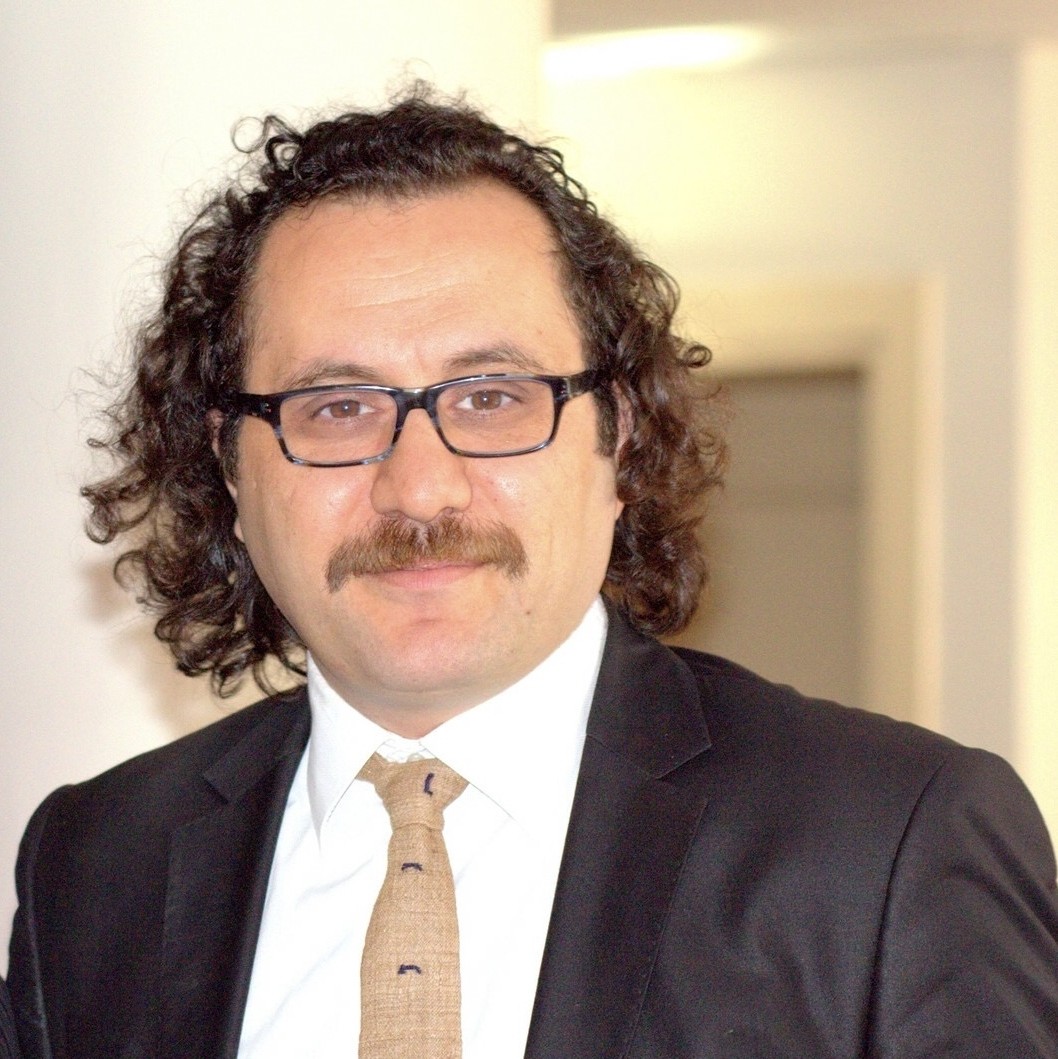
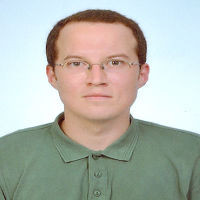
Doç. Dr. Barış Çağırkan (d. 17 Eylül 1989), İzmir Demokrasi Üniversitesi Sosyoloji Bölümü öğretim üyesidir. Lisans eğitimini Afyon Kocatepe Üniversitesi Sosyoloji Bölümü'nde tamamlamıştır. Lisansüstü çalışmalarına İngiltere’de devam eden Çağırkan, University of Southampton’da yüksek lisans eğitimini sürdürmüştür. Doktora eğitimini ise Ankara Hacı Bayram Veli Üniversitesi Lisansüstü Eğitim Enstitüsü Sosyoloji Anabilim Dalı’nda tamamlamış; “Ahıska Türklerinin sürgünü, zorunlu göç süreçleri ve Türkiye'ye dönüşleri: Ahlat örneği” başlıklı doktora teziyle doktora derecesini almıştır.
Akademik ilgi alanları göç, kadın araştırmaları, yeni medya, kimlik ve aidiyet çalışmaları etrafında şekillenmektedir. Çağırkan, çalışmalarında özellikle toplumsal yapılar, cinsiyet rolleri, milliyetçilik, sosyal medya ve bireysel/kollektif kimlik inşası arasındaki ilişkileri sosyolojik bir perspektifle ele almaktadır. Araştırmalarında hem nitel hem de nicel yöntemleri kullanmakta, özellikle refleksif tematik analiz, söylem analizi, karma yöntem yaklaşımları ve yapısal eşitlik modellemesi gibi yöntemsel araçlarla disiplinler arası çalışmalara katkı sunmaktadır.


 Web
Web
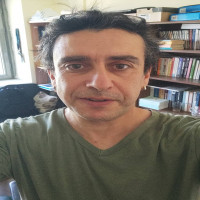
1979 yılında Konya'da doğdum, 2002 yılında Ankara Üniversitesi Siyasal Bilgiler Fakültesi İşletme Bölümünden mezun oldum, 2005 yılında Selçuk üniversitesi Sosyal Bilimler Enstitüsü Sosyoloji ana bilim dalında yüksek lisansını, 2023 yılında da Ota Doğu Teknik Üniversitesinde Sosyoloji alanında Doktoramı tamamladım. Halen Afyon Kocatepe Üniversitesinde Sosyoloji Bölümünde Dr. Öğr. Üyesi olarak görev yapmaktayım.

Yayın ve Danışma Kurulu*



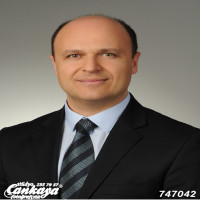
Xabier Martínez Rolán is professor and researcher at University of Vigo, specializing in digital media and communication, with a focus on content analysis and social networks. He coordinates the educational innovation group Academ-IA: Artificial Intelligences in Education, dedicated to promoting the integration of AI in educational settings. Xabier has authored numerous articles in academic journals and actively participates in research projects exploring the impact of digital technologies on communication and education, advocating for the responsible use of technology in society.
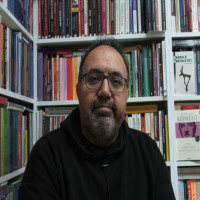
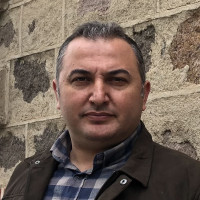


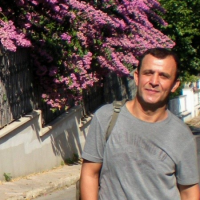
Prof. Dr. Nesrin KALYONCU is working currently at the Department of Music of Bolu Abant Izzet Baysal University (BAİBÜ) in Turkey. Kalyoncu, after graduating from the Gazi University, started her academic career as a research assistant at BAİBÜ. After finishing here the graduate program, she started her doctoral studies in 1996 at the Ludwig-Maximilians University in Munich by winning a state scholarship. In 2001, she completed her doctorate in the main branch of Music Pedagogy and in auxiliary branches of Musicology and Educational Sciences and returned home and undertook her compulsory service stipulated at the BAİBÜ. Currently, she has been working at Musicology Program as a fulltime Professor. She has many publications in various subject areas of Music Pedagogy and Musicology. Kalyoncu was the Turkey National Coordinator of European Association for Music in Schools (EAS) 2006-2017, and organized the 18th International EAS Conference (2010) with her team in Bolu, Turkey. She was also board member of EAS (2008-2010: coopted; 2011-2015: elected). She was also the dean of the Faculty of Fine Arts at BAİBÜ 2014-2018.

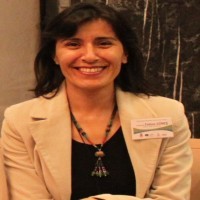
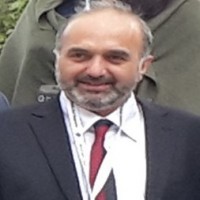
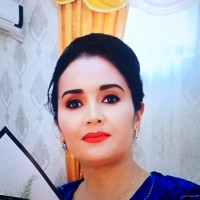
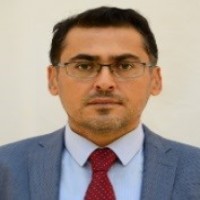
1976 yılında Özbekistan'ın Fargona bölgesinde doğdu. 1998 yılında Fargona Devlet Üniversitesi Filoloji Fakültesi'nden mezun oldu. 2004 yılında modern Özbek şeriatının incelenmesi üzerine yazdığı teziyle filoloji bilimleri adayı unvanını aldı. 2022 yılında "Bağımsızlık dönemi Özbek düzyazısında yaratıcı insan kavramı" konulu doktora tezini (DSc) savundu. 4 monografın, 10'dan fazla çalışmanın ve metodolojik çalışmanın ve 100'den fazla makalenin yazarıdır. Alanlar: yaratıcılık psikolojisi, modern Özbek edebiyatı, edebiyat çalışmaları, edebiyat teorisi, dilbilim.